Rating: ★★★★★/5
One Word to Describe It: Evocative
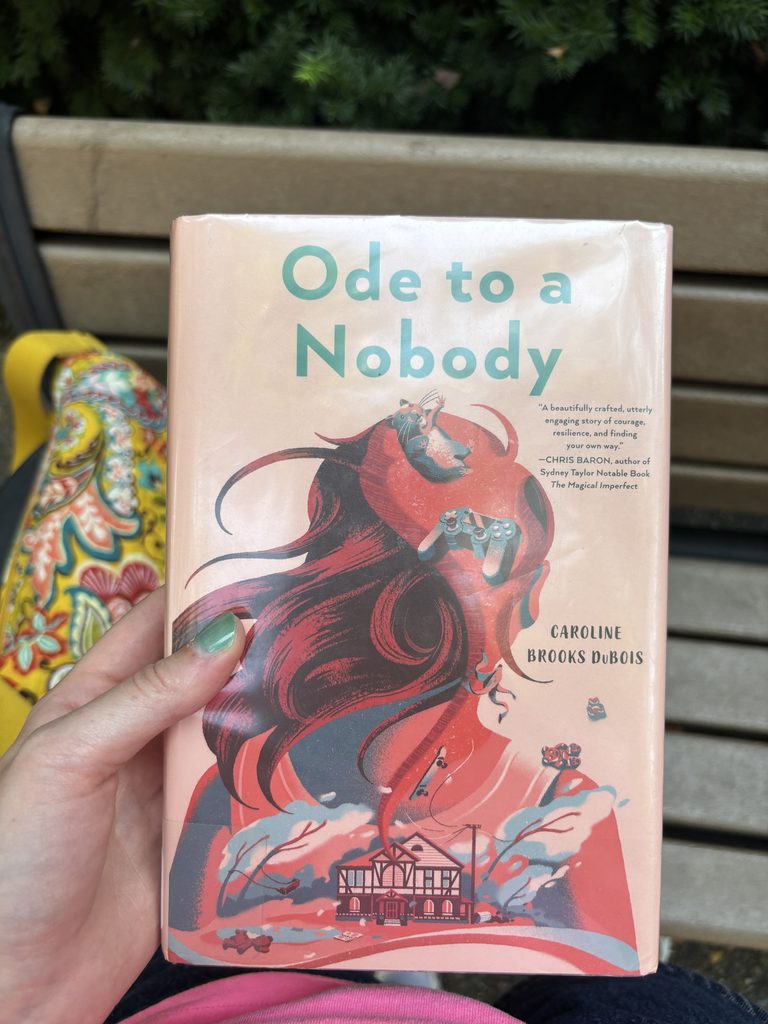
What a read. This was one of the first YA novels assigned for a class I’m taking this semester, Literature, Pop Culture, and New Media. It made me feel all the feels of being a middle schooler even though it’s been over a decade since I was in Quinn’s shoes. Aside from the plot (which was a joy to watch unfold), the verse here is what really takes the cake. This was a kind of poetry that makes you want to grab a pencil and start writing yourself.
One of my favorite stylistic aspects of this novel was DuBois’ decision to not only write in verse but also to vary her poems’ shapes and forms into those Quinn is learning in class (i.e. “Homework: Diamonte Opposites;” “Tornado;” “Playgrounds”). This not only conveyed Quinn’s growing engagement with the various poetry forms introduced by Ms. Koval but also kept my attention as a reader: I never knew which type of poem to expect when I turned the page. Quinn’s story also reminds me of the ever-present awkwardness of middle school and how many challenges, both natural and human-made, we often face during that discovery phase of life.
I think this novel would be a great addition to anyone’s classroom. Regardless of my future students’ ages and/or reading goals, I see this being a happy edition to our classroom bookshelf (but extra brownie points if I end up teaching middle school). Be on the lookout for a multitude of YA novels over the next few months as my class goes through one to two each week!